Home / Legality in Action

Legality in action: the documented journey of every AW&L log.

These photographs were taken during field operations and independent inspections in AW&L's community forest concessions in Liberia. They show what "100% traceable" actually looks like on the ground — from the standing tree to the export yard.

Step 1 — The Forest

FDA-approved community forests.

AW&L operates only in community forest concessions approved by Liberia's Forestry Development Authority (FDA), under social agreements signed with the forest communities themselves. Before any tree is touched, the forest area is surveyed, mapped and enumerated.
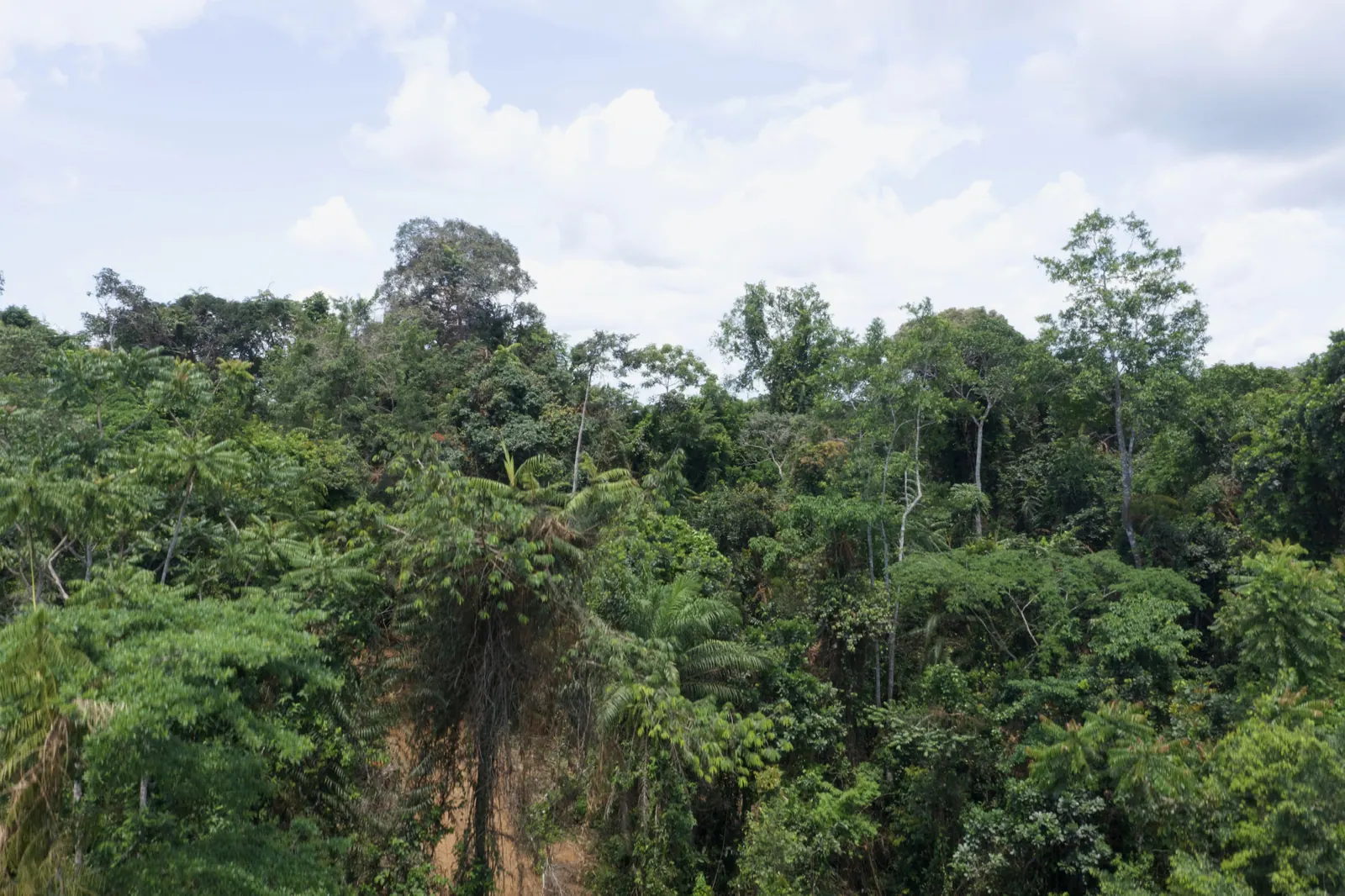
Tropical forest canopy in an AW&L community forest concession, Liberia
The canopy of a community forest under AW&L management.
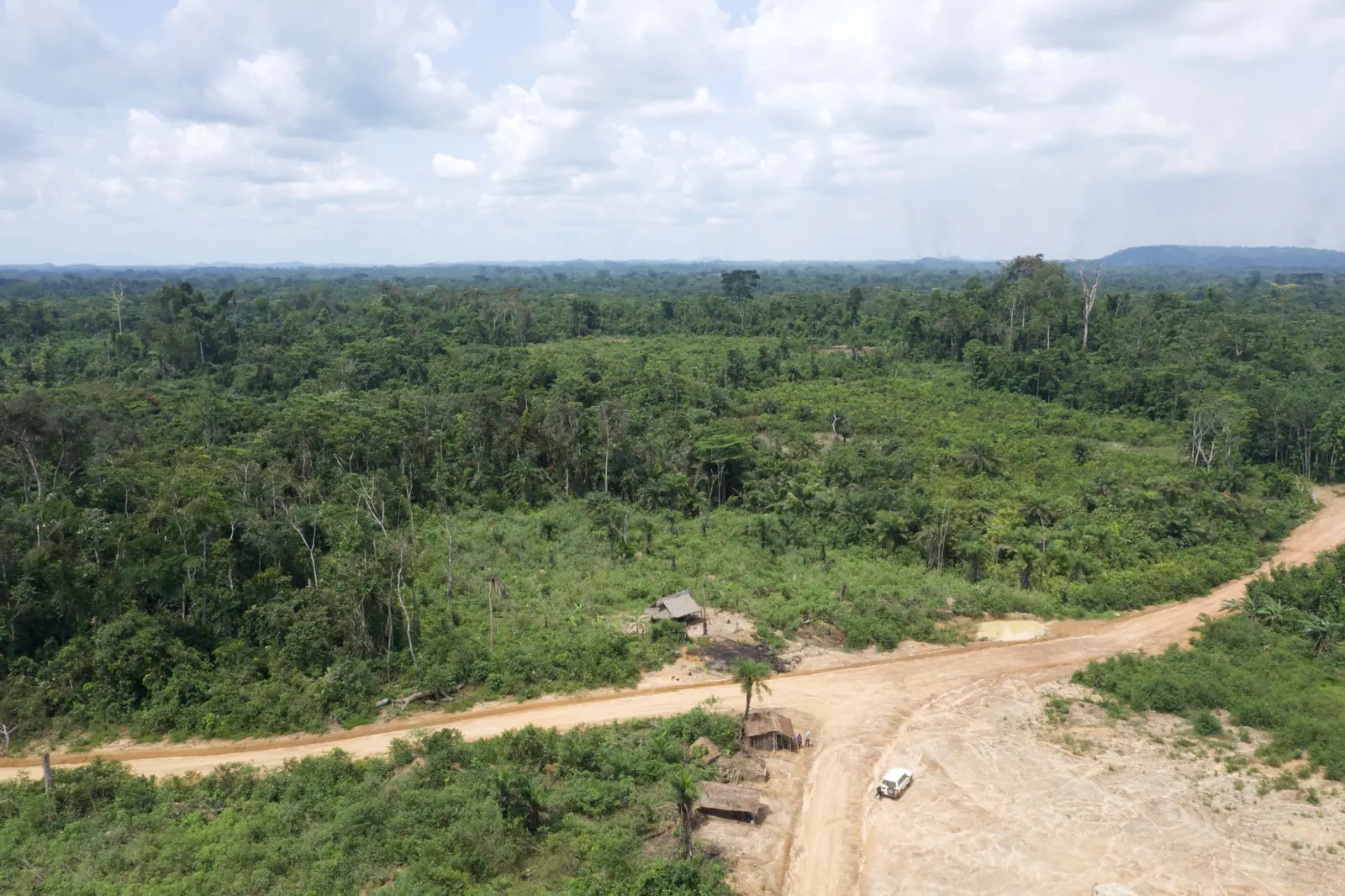
Aerial view of forest camp and access road in AW&L concession, Liberia
Forest camp and access road, seen from the survey drone.
Step 2 — Enumeration

Every tree counted, before harvest.

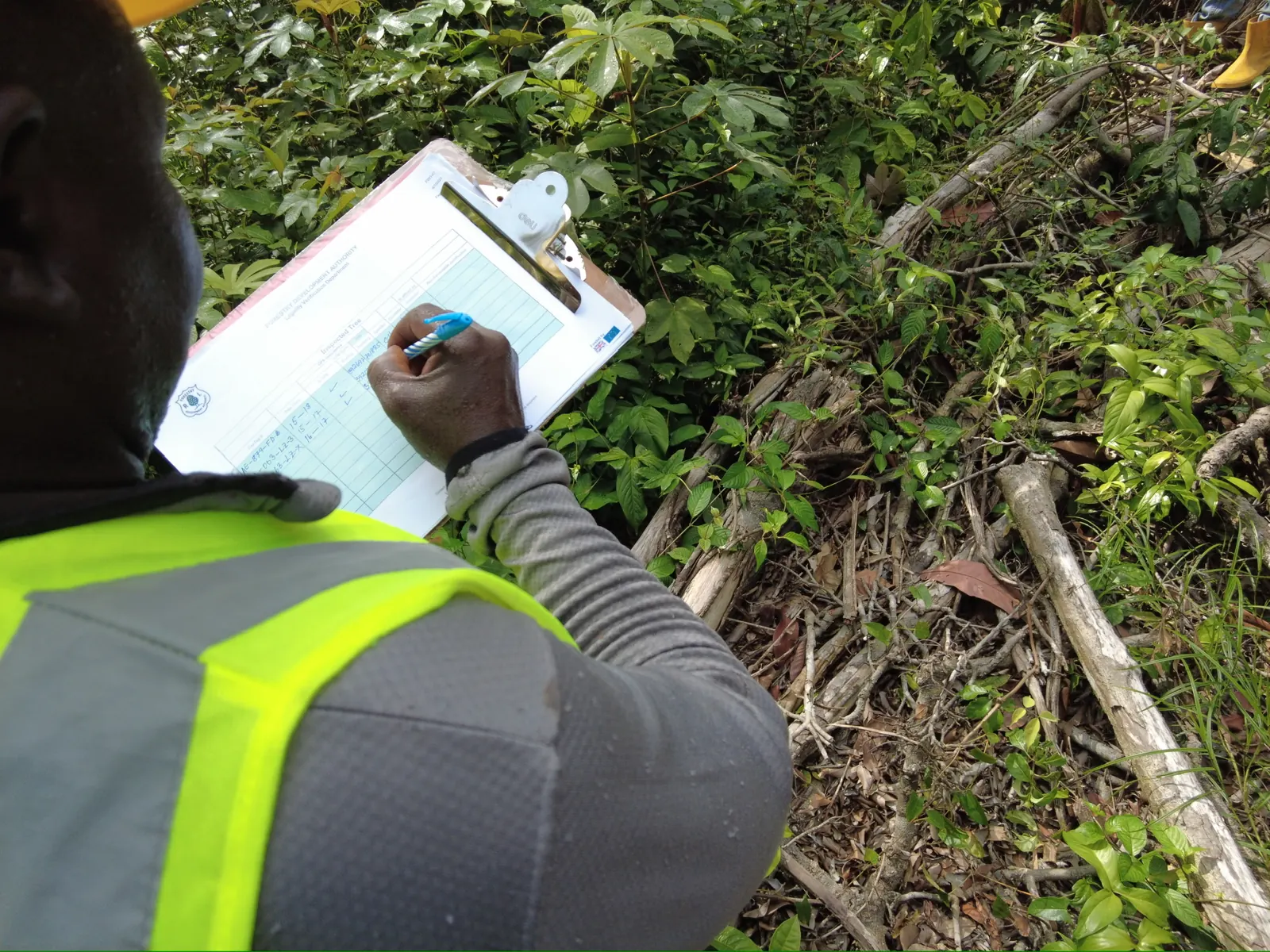
Field crews enumerate standing trees — species, diameter, position — and every commercial tree receives a unique ID registered in LiberTrace, Liberia's national chain-of-custody system. Harvesting is only permitted against this pre-approved stock survey.
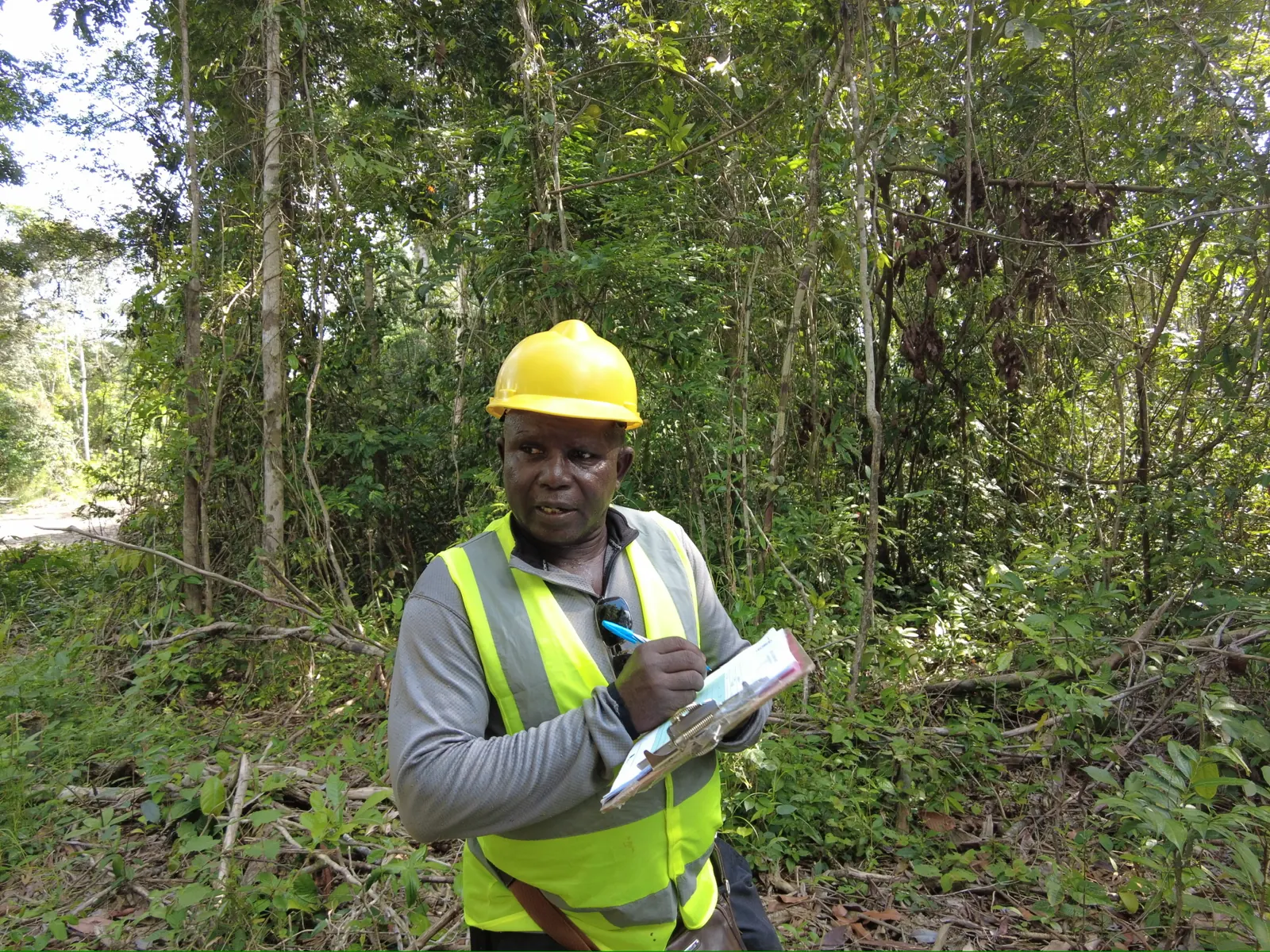
AW&L enumeration crew member recording tree data on clipboard in the forest
Recording tree data during the stock survey.
Close-up of field inspection form used during timber verification in Liberia
Field forms document every verified item.
Step 3 — Independent Verification

Stump by stump, verified by independent inspectors.

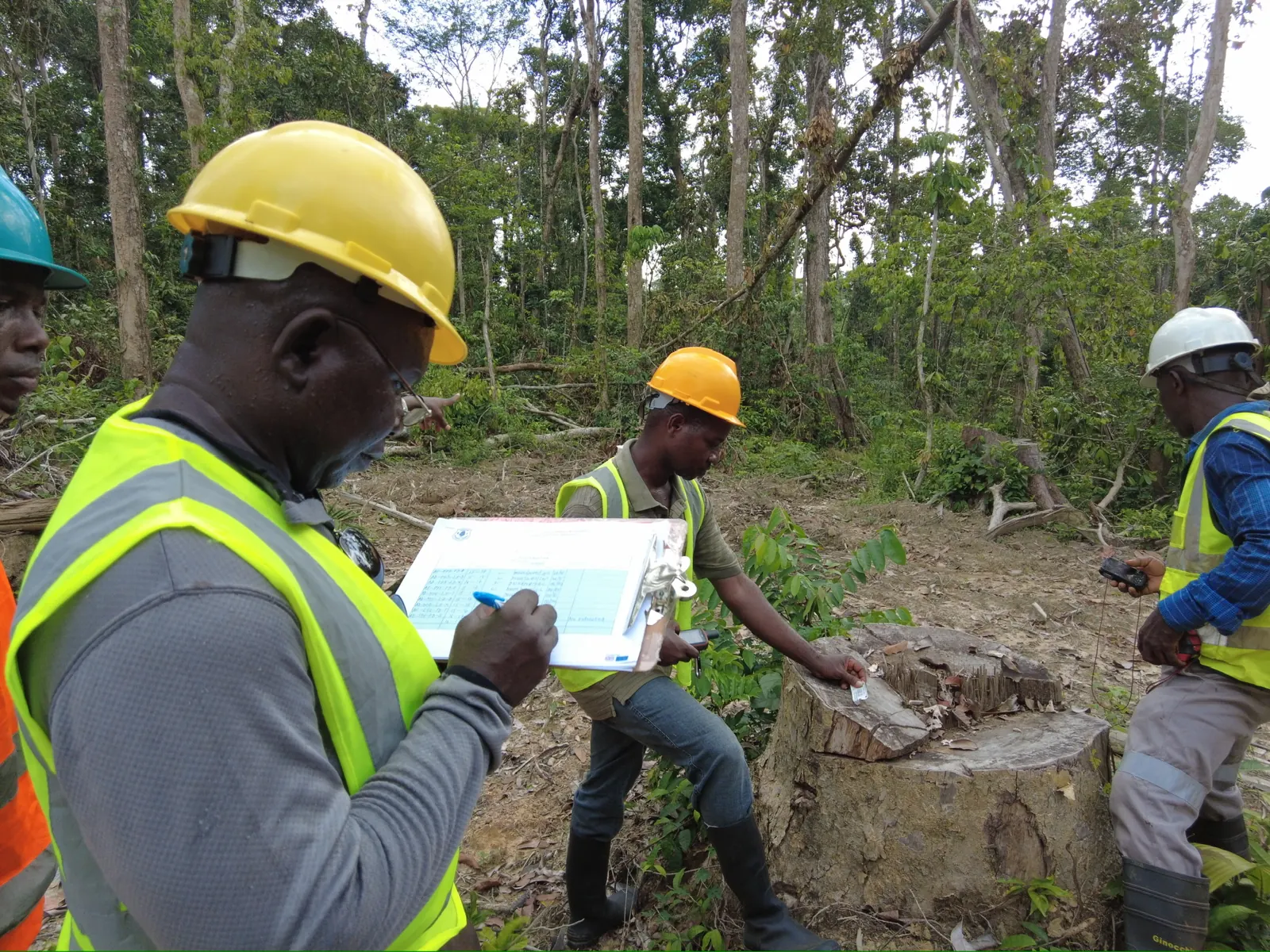
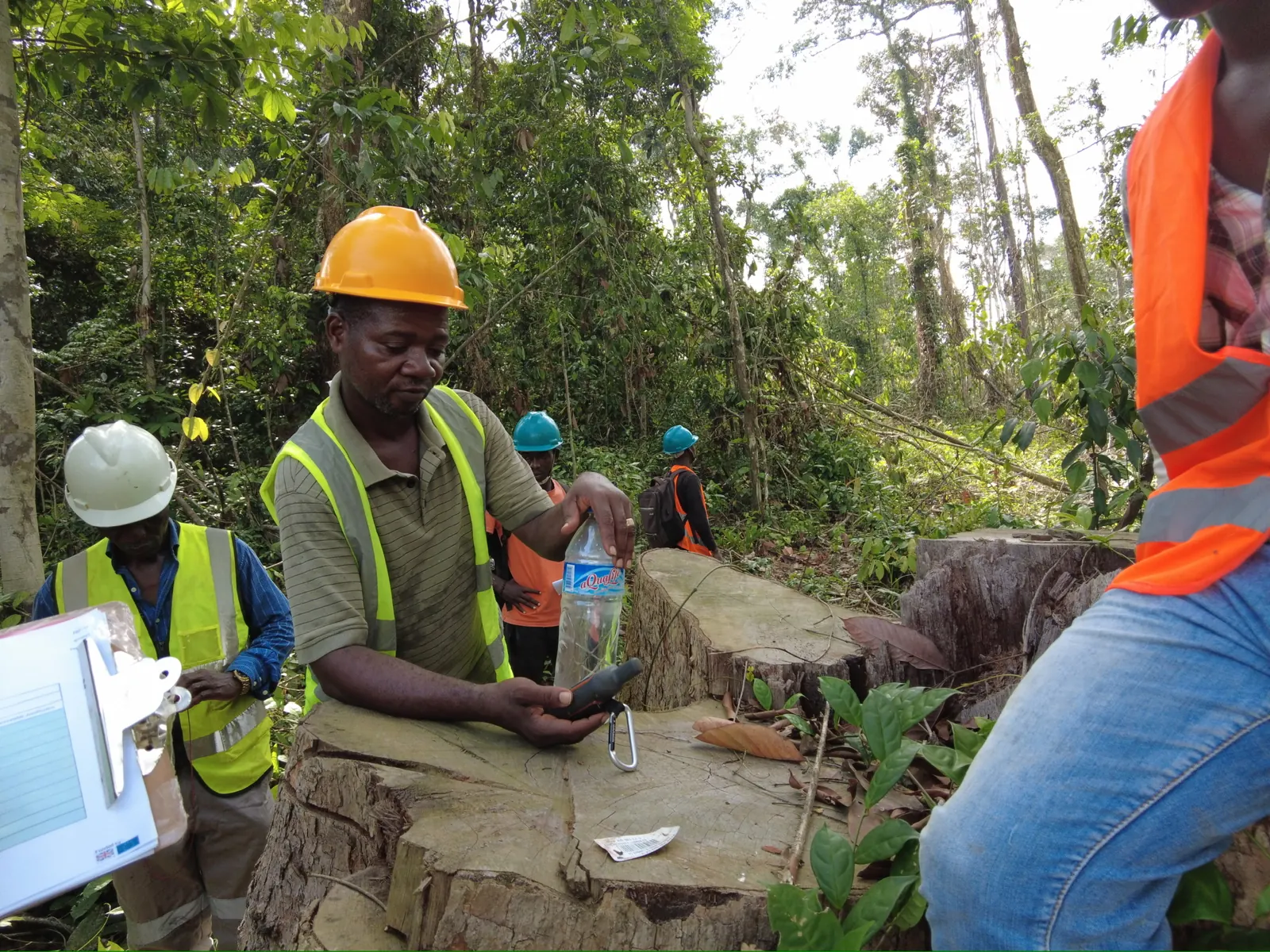
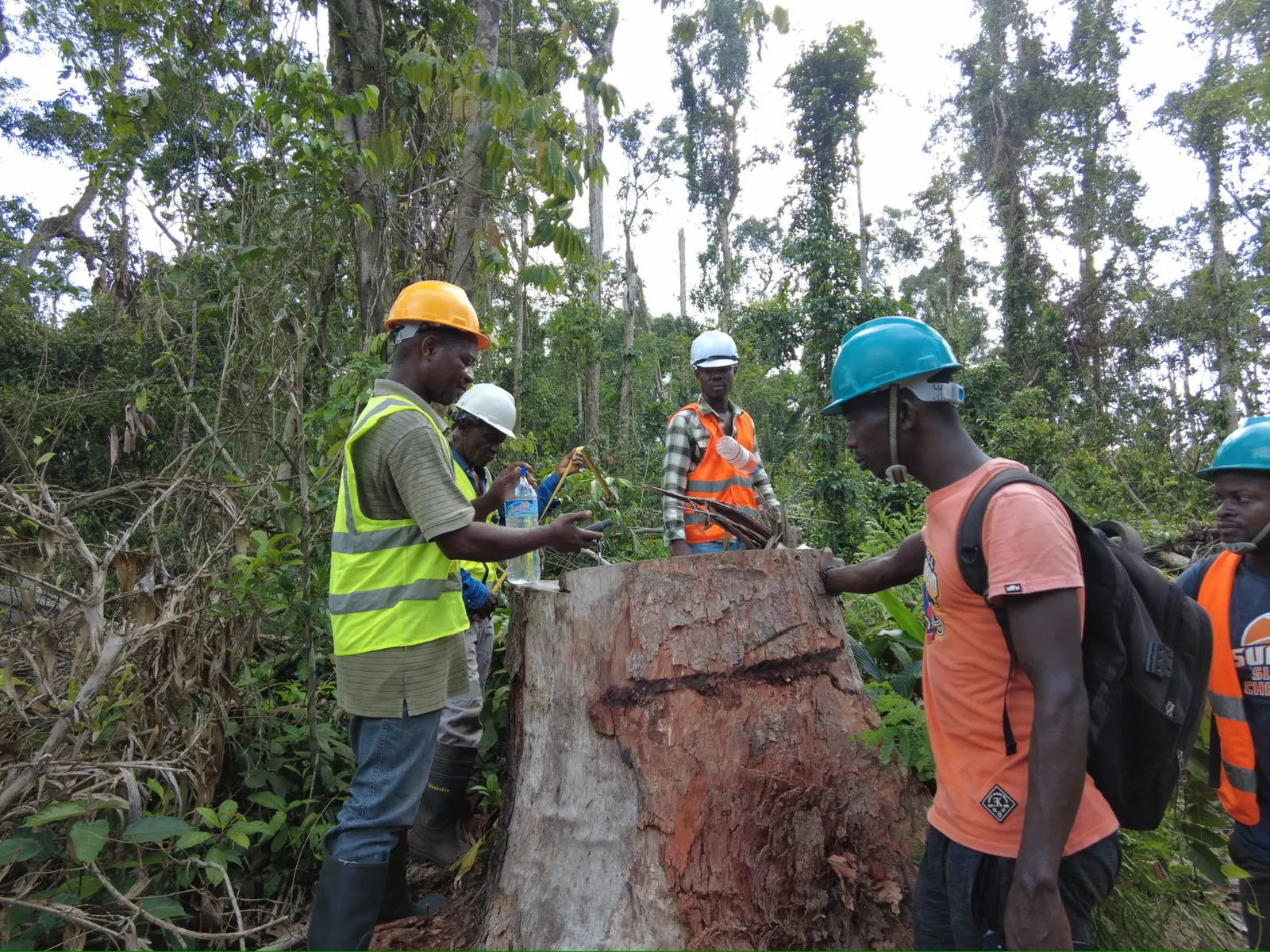
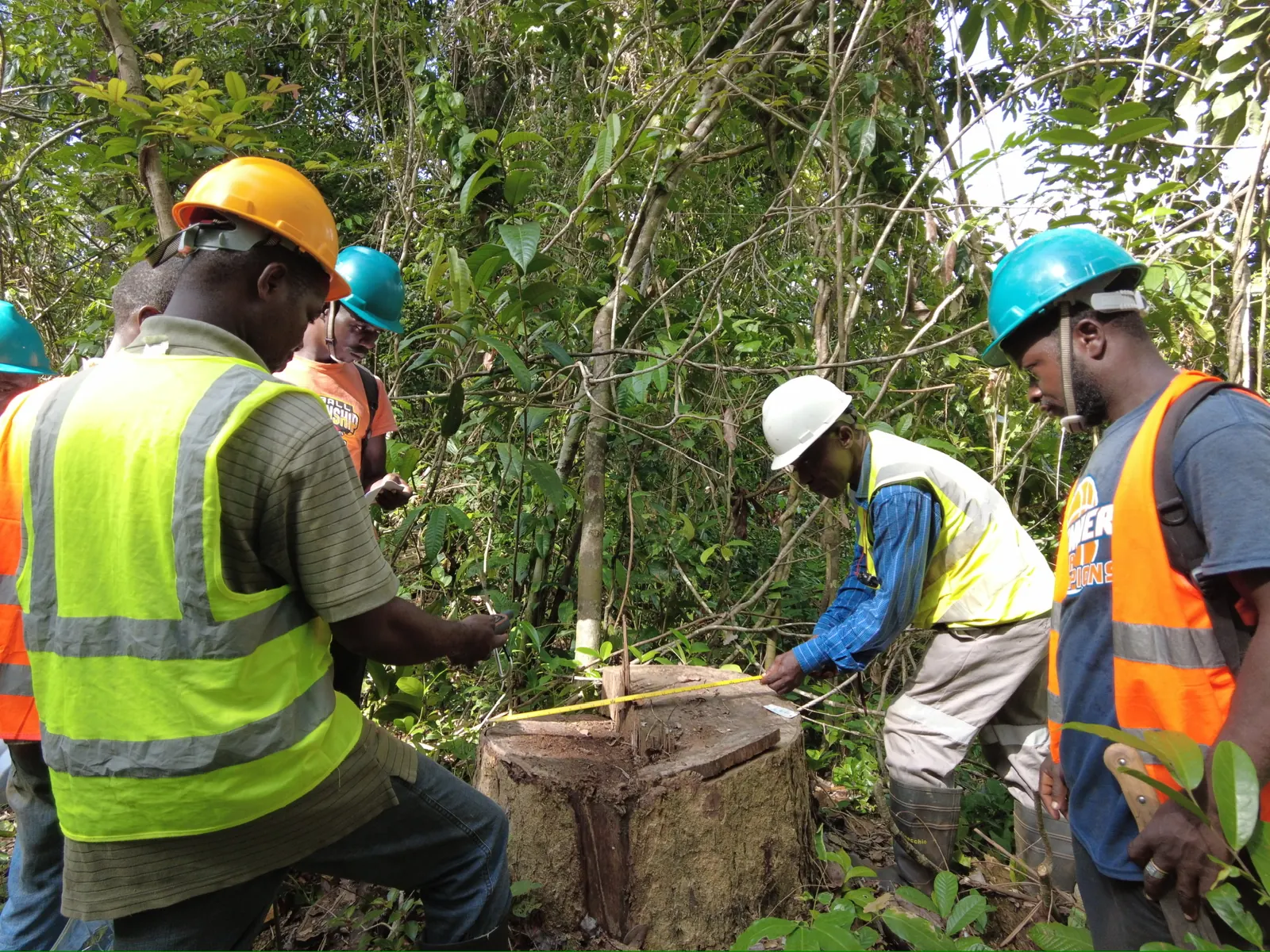
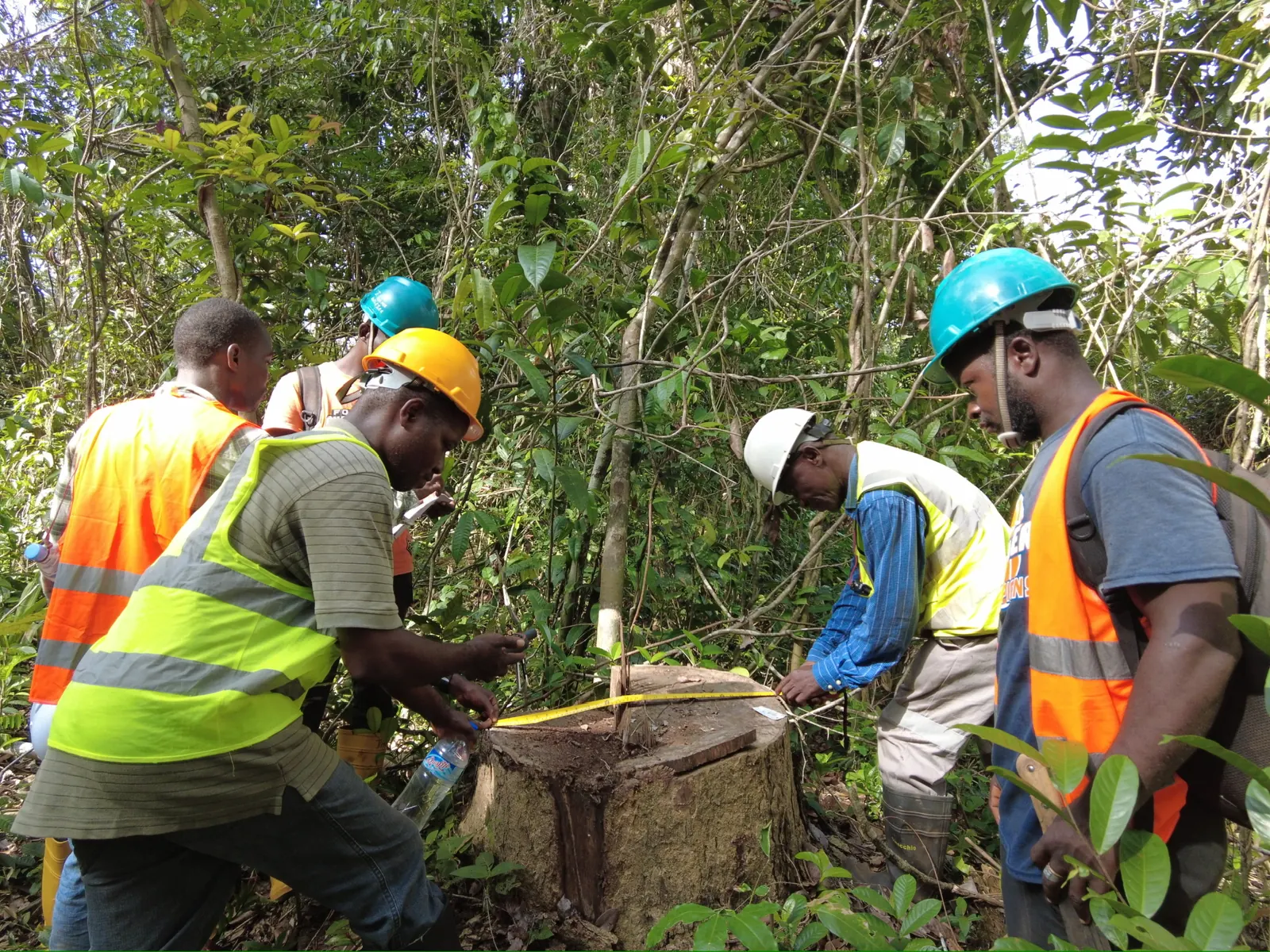
After felling, independent third-party inspectors walk the harvest blocks and verify each stump against the harvest records: tree ID, species, diameter, location. This physical stump-to-log reconciliation is what makes the chain of custody verifiable, not just declared.
Independent inspectors measuring a stump during timber legality verification in Liberia
Measuring a stump against the harvest record.
Inspection team verifying stump diameter in AW&L harvest block
Cross-checking diameter and tree ID.
Inspector recording stump verification data in AW&L concession
Every verification is documented on site.
Stump with verification documents during chain of custody inspection
Stump, ID and paperwork reconciled together.
Step 4 — The Tag

One tag, one tree, one story.

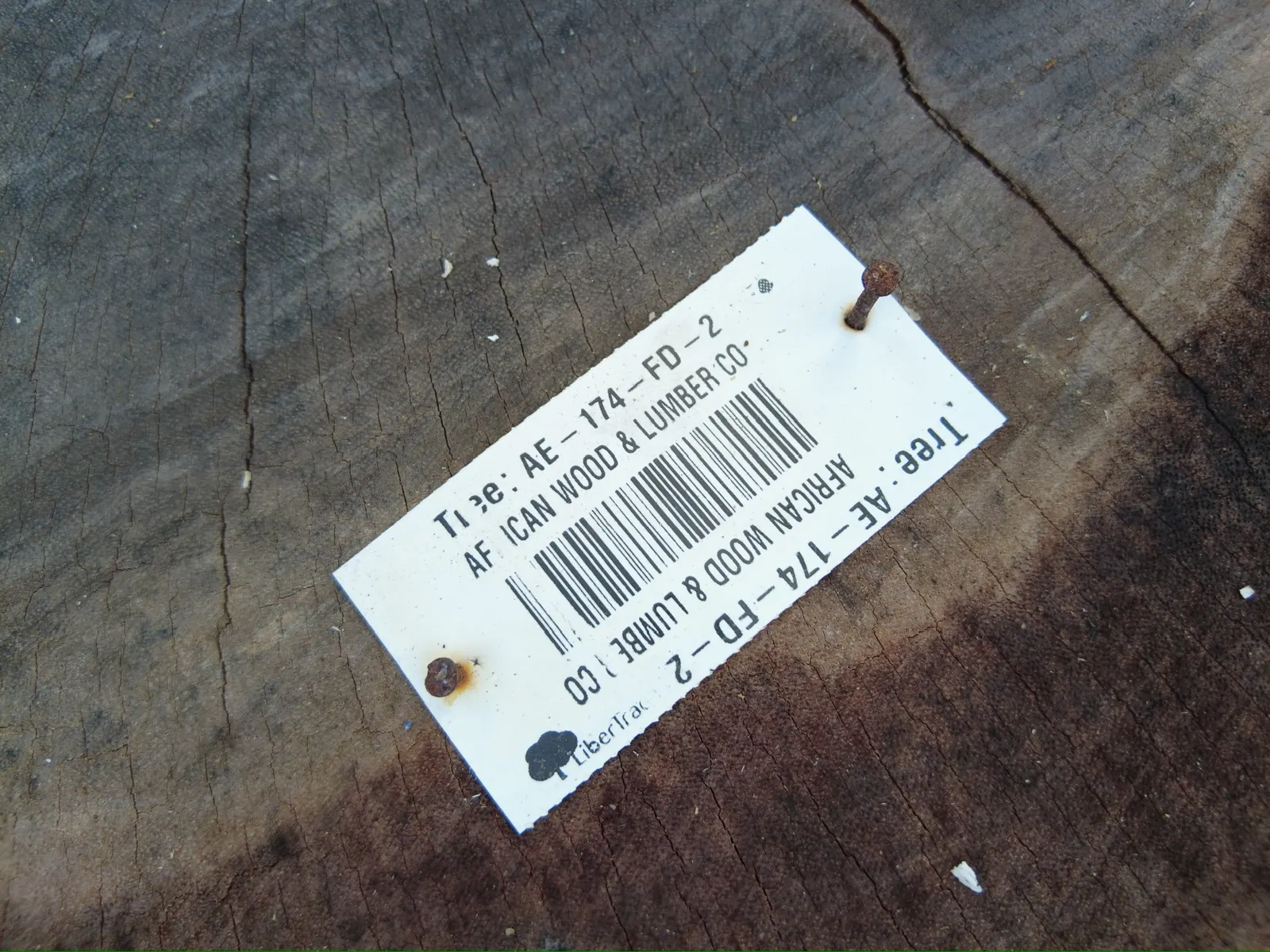
This is what traceability physically looks like: a barcode tag — Tree AE-174-FD-2 — fixed to the wood and registered in LiberTrace. From this moment, the log can be traced from any point in the supply chain back to the exact stump it came from.
LiberTrace barcode tag Tree AE-174-FD-2 on African Wood & Lumber log, Liberia
LiberTrace tag on an AW&L log: the physical link between forest and shipment.
Why it matters for buyers: the tag data feeds the documentation package AW&L provides for EUTR/EUDR due diligence — species, geolocation of origin, harvest permit and export permit, all reconciled by an independent party.
Step 5 — Extraction

Extraction under the Code of Harvesting Practices.

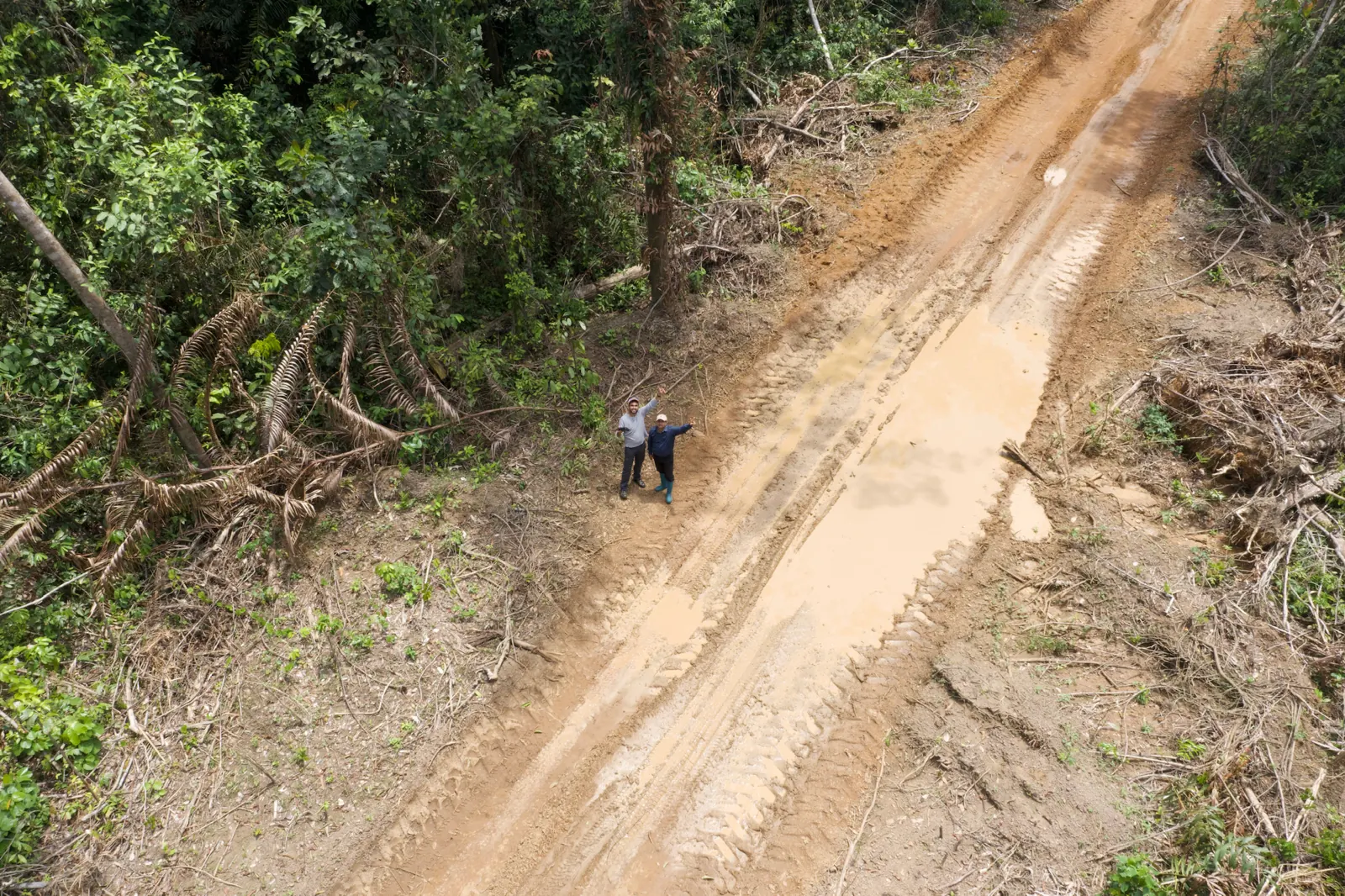
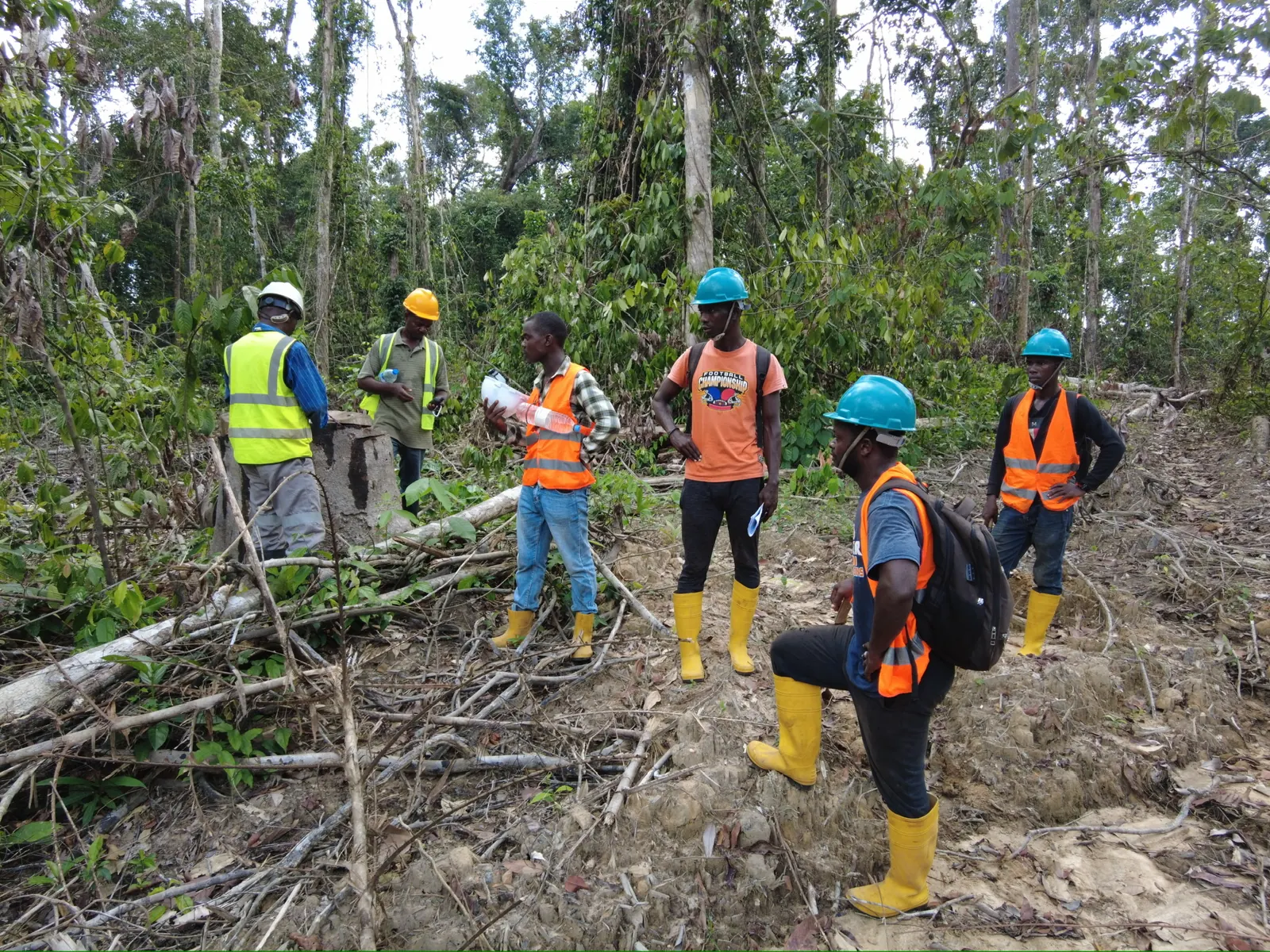
Logs are extracted along planned skid trails and forest roads built to Liberia's Code of Harvesting Practices, minimising the footprint on the surrounding forest. Inspection teams accompany the operations in the field.
Aerial view of forest extraction road in AW&L concession, Liberia
Extraction road through the concession, from above.
Inspection team walking an AW&L harvest site in Liberia
Walking the harvest block during verification.
Log inspection at harvest site in AW&L community forest concession
Log-side checks before transport.
Step 6 — The Log Yard

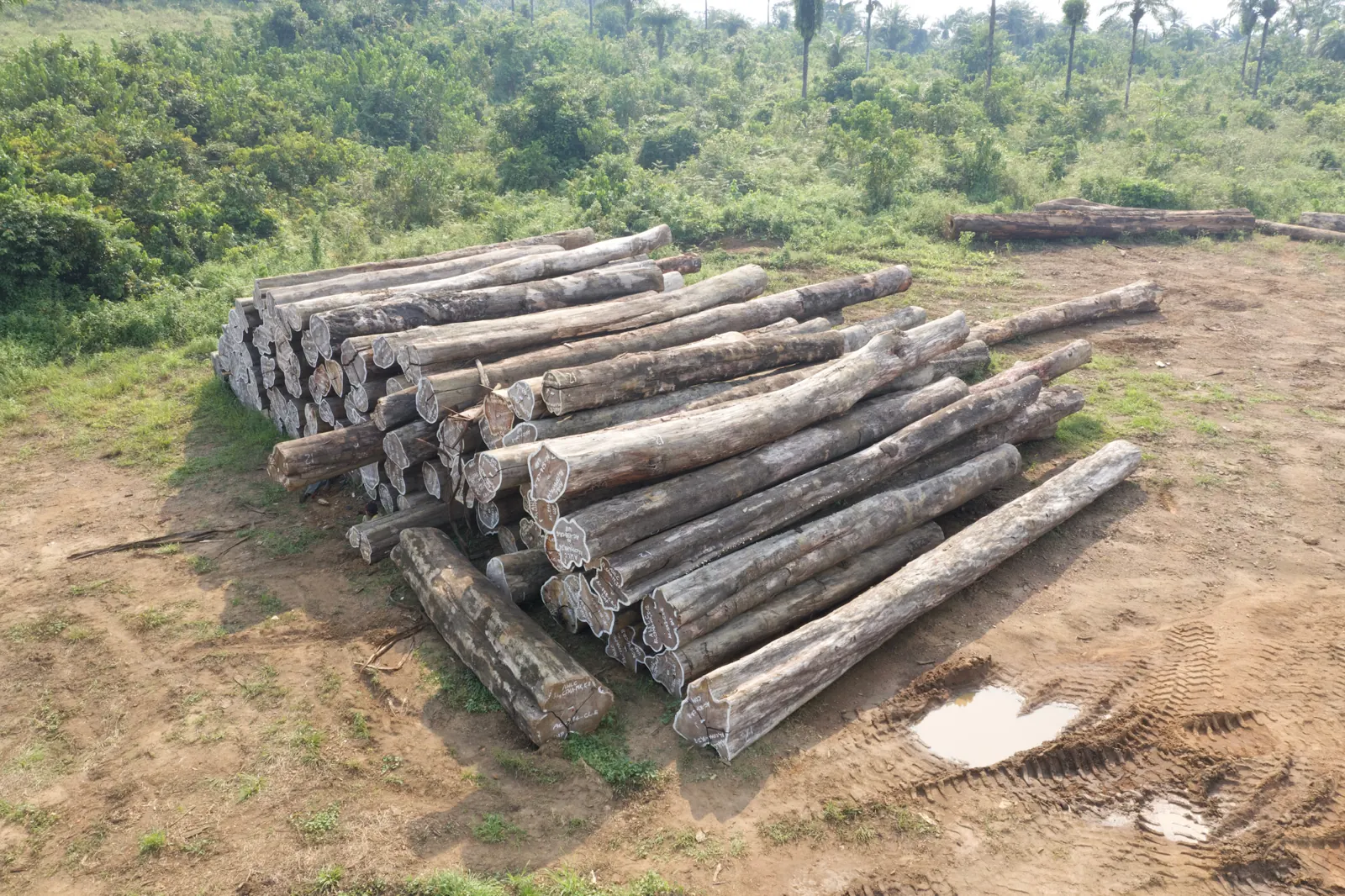
Tagged stock, ready for inspection and export.

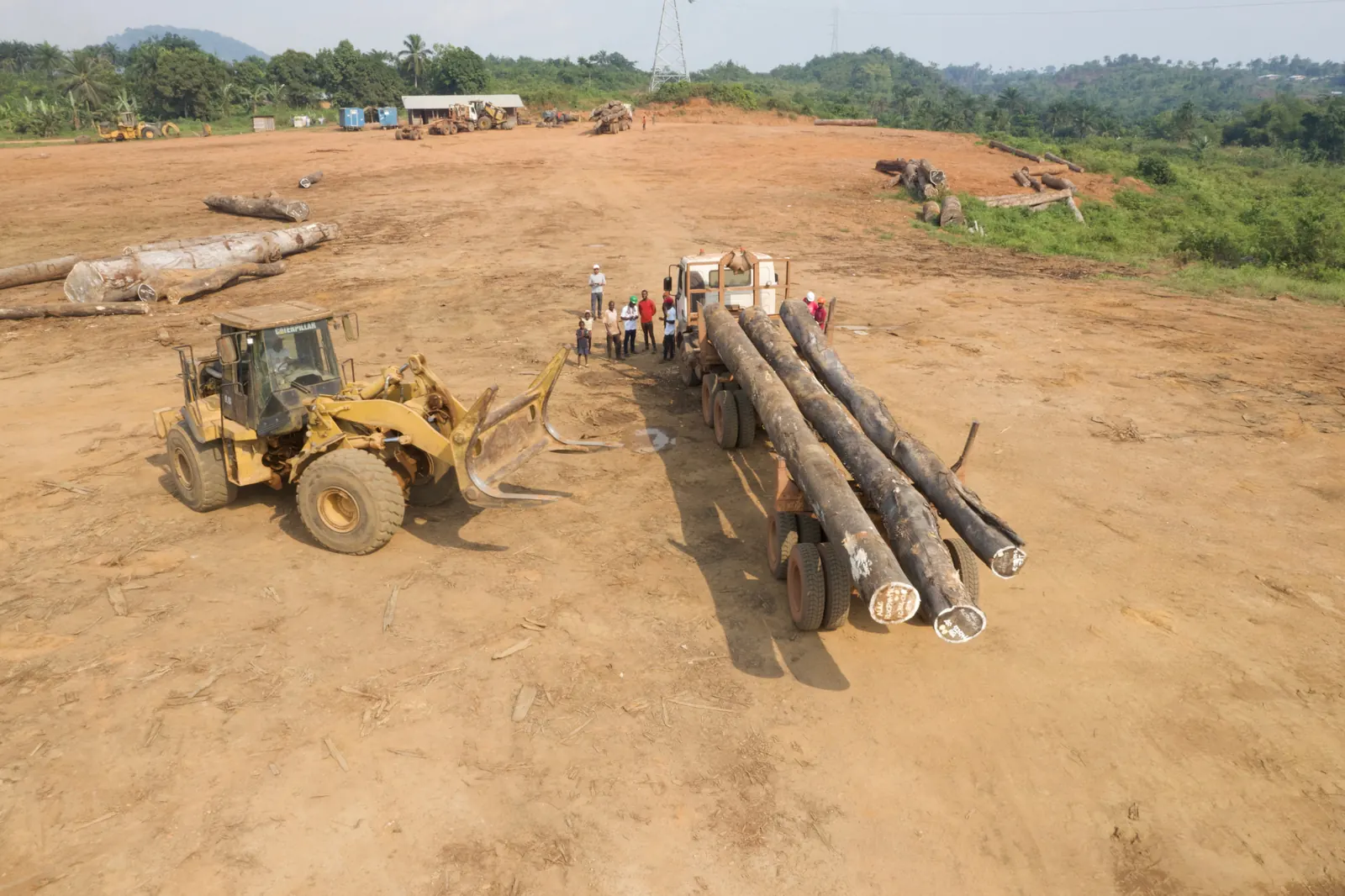
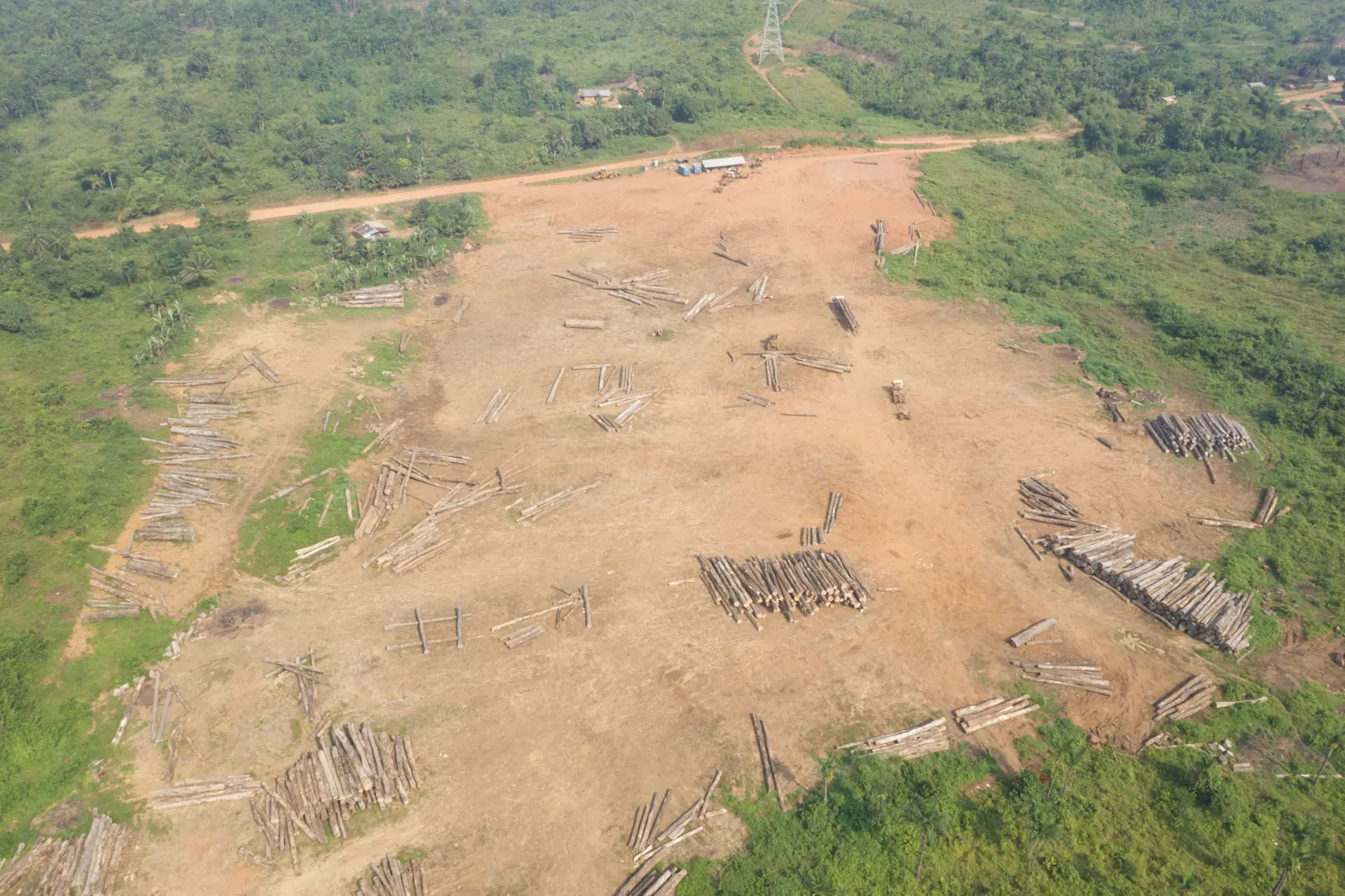
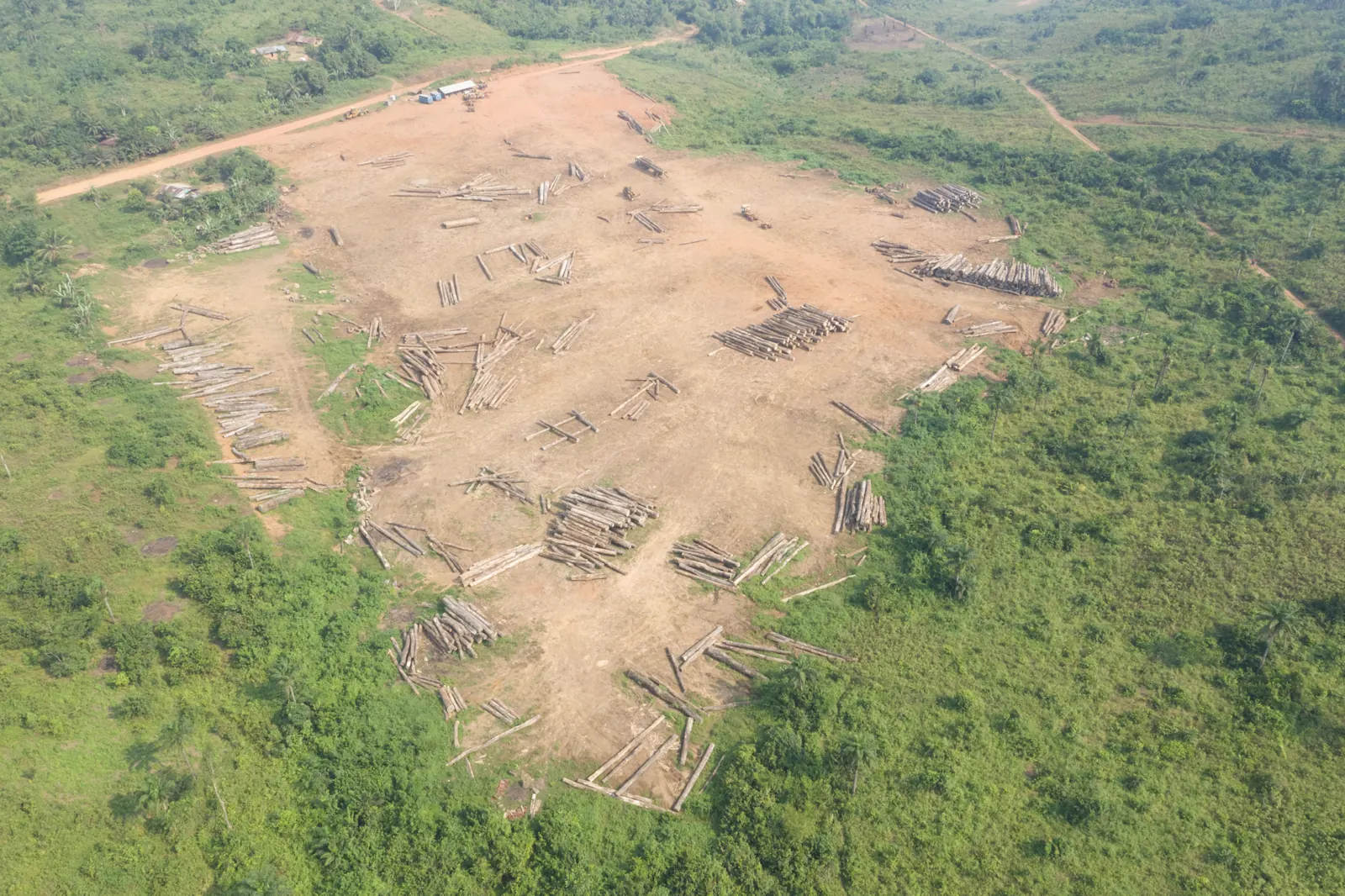
At the AW&L log yard, every log is stacked by species and specification, tag visible, ready for measurement, grading and pre-shipment inspection. What you see below is live, verifiable stock — the same stock registered clients can browse in the Client Area.
Aerial view of AW&L log yard with tagged tropical hardwood logs, Liberia
The AW&L log yard from the survey drone.
Drone view of organised log stacks at AW&L yard in Liberia
Stock organised by species and specification.
Stack of tagged tropical hardwood logs at AW&L log yard
Tagged logs stacked for grading.
Wheel loader handling logs at AW&L log yard in Liberia
Yard operations: sorting and preparing shipment lots.
How it works

The chain of custody, explained in 90 seconds.

Every AW&L log carries an unbroken identity from the standing tree to the ship. This short animation follows that identity step by step: the Tree Tag applied at enumeration, the stump that keeps it forever, the Log Tag issued before extraction, the new tags created when a log is cross-cut, and the documents that travel with the shipment.

Click the animation to pause. Tag colours (green Tree Tag, yellow Log Tag, blue cross-cut tags, white Batch Tag) are used in this film only to make the explanation clear — in reality every AW&L tag is white.

Tree Tag → Log Tag. The tag applied during enumeration is the Tree Tag; it stays on the stump after felling as permanent proof of legal origin. The log then receives its own Log Tag, cross-referenced in LiberTrace. When a log is cross-cut, the mother tag is retired and each new piece receives its own tag, still linked back through the chain to the original stump.
Watch

From forest to export, in 90 seconds.

See the paperwork behind the pictures.

Request current stock, specifications and the full legality documentation package for your due diligence.

Contact us  Read the Buyer FAQ